
Herbal Extracts & Botanical Insights
Discover expert articles, scientific research, and technical guides on plant extraction technology.
Standardized Phytochemical Solutions
In-depth analysis of active botanical ingredients and global health trends.
Innovations in Natural Phytochemicals
Updating formulators and industry leaders with reliable botanical science updates.
Top Green Coffee Extract 50% Suppliers for Global Buyers?
Table of Contents
Global buyers are examining Green Coffee Extract 50% with greater care as demand for standardized botanical ingredients expands. The product usually refers to green coffee extract standardized to approximately 50% chlorogenic acids. That percentage sounds precise. It is not sufficient by itself.
The U.S. Department of Agriculture’s Foreign Agricultural Service projected global coffee production at about 176 million 60-kilogram bags for 2024/25. This large supply base supports ingredient sourcing, but raw coffee origin still affects extract consistency. Grand View Research also identifies rising interest in green coffee products, particularly within dietary supplements and functional nutrition. Market estimates differ between reports. Buyers should question unusually confident forecasts.
Quality begins with evidence. A dependable supplier should provide batch-specific HPLC results, a complete certificate of analysis, allergen statements, microbiological testing, and pesticide and heavy-metal results. Solvent residues matter too. Traceability should connect the finished powder to a defined farm, processor, or trading lot. Dr. Joe Vinson, a leading researcher on coffee antioxidants, stated, “Coffee is the number one source of antioxidants in the U.S. diet.” His observation concerns coffee broadly, not every Green Coffee Extract 50% product. That distinction deserves attention. Suppliers should therefore explain chlorogenic-acid testing methods, extraction solvents, carrier materials, and storage conditions. A clear specification sheet is useful. Independent verification is better. Buyers comparing the top Green Coffee Extract 50% suppliers should assess documentation, manufacturing controls, delivery reliability, and regulatory readiness—not just price or headline potency. The strongest shortlist may look less impressive at first. That can be a good sign.
What Is Green Coffee Extract 50% and Why Does It Matter?
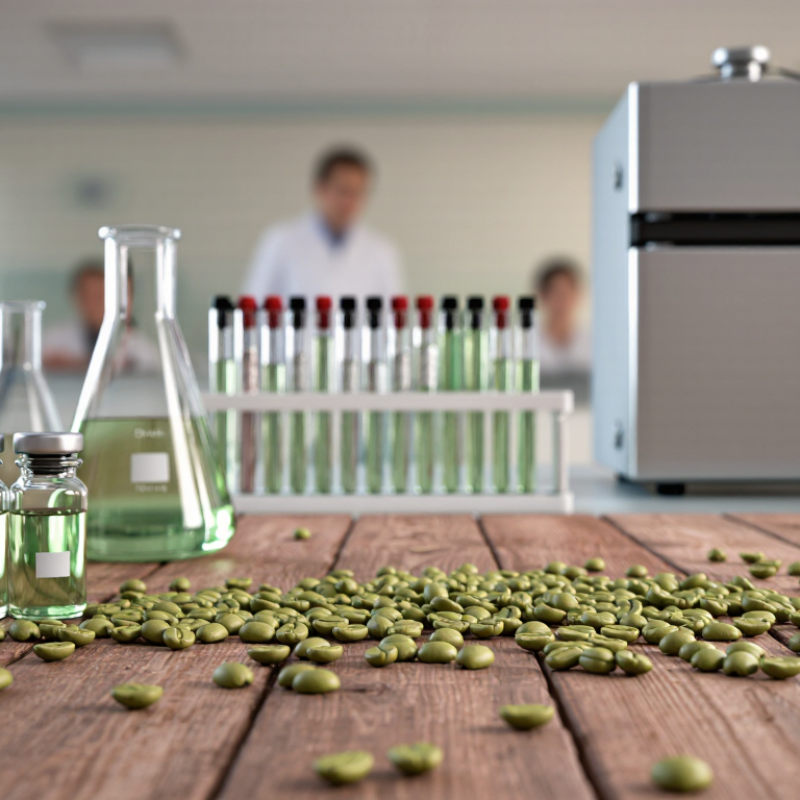
Green coffee extract 50% usually refers to an extract standardized to contain 50% chlorogenic acids. It is made from unroasted coffee beans, not roasted beans. The “50%” describes a measured active compound level, not the total extract purity.
This distinction matters to global buyers. A pale brown powder may look acceptable, yet appearance cannot confirm chlorogenic acid content. Reliable suppliers should provide batch-specific certificates of analysis, testing methods, residual solvent data, microbiological results, and heavy metal limits. Buyers should also check whether the 50% value uses HPLC testing or another method. Results can differ.
In practical use, the extract should disperse consistently in a trial formulation. A bitter, grassy note may appear in drinks, capsules, or powdered blends. Moisture can cause clumping during storage, especially in humid ports. Packaging with a suitable moisture barrier helps, but it is not a complete solution. I have seen specifications that looked precise but lacked sampling details. That is a warning sign.
Experienced procurement teams compare more than price. They review botanical identity, extraction solvents, origin records, shelf-life evidence, and traceability. They also request a retained sample before placing a larger order. Small inconsistencies may reveal bigger quality problems. Supplier communication matters too. Clear answers are useful. Overconfident promises are not.
How to Evaluate Green Coffee Extract 50% Suppliers
Top Green Coffee Extract 50% Suppliers for Global Buyers?
How to Evaluate Green Coffee Extract 50% Suppliers
Evaluate suppliers through evidence, not attractive brochures. The USDA Foreign Agricultural Service estimated 2024/25 global coffee production at 174.9 million 60-kilogram bags. This scale creates wide variation in origin, maturity, drying, and storage. Ask for the botanical identity, country of origin, harvest period, extraction solvent, and processing temperature. A credible supplier should provide a batch-specific certificate of analysis, not a recycled template. It should confirm 50% chlorogenic acids, caffeine level, moisture, ash, microbiological limits, heavy metals, pesticides, and residual solvents. Ask for test methods and laboratory accreditation.
Market pressure also matters. The ICO Coffee Market Report for December 2024 recorded a composite indicator price of 299.61 US cents per pound. Sudden price changes may encourage weaker raw-material substitutions or rushed processing. Request three consecutive batch reports and compare the results. Not just paper. Check whether the declared chlorogenic-acid result uses HPLC, with clear reference standards and sampling procedures. ISO 4052 can support caffeine testing, although it does not replace a complete extract specification. Verify GMP controls, traceability records, allergen statements, packaging integrity, and shelf-life data. A sealed foil bag should show a lot number, manufacture date, and storage conditions. Ask for a retained sample. It is a simple safeguard.
One weakness in my own checklist is relying too heavily on numerical purity. Sensory odor, color stability, and dispersibility can reveal processing problems that certificates miss. Supplier audits, independent verification, and small pilot orders reduce that risk. Evaluate consistency, not only the highest result.
Key Quality, Testing, and Certification Requirements
For global buyers, a 50% green coffee extract supplier should prove more than a polished specification sheet. The target usually means 50% chlorogenic acids, not simply “coffee solids.” Buyers should request HPLC results, the test method, sample preparation details, and the laboratory’s accreditation. ISO 20481 supports HPLC caffeine testing, while validated chromatographic methods are commonly used for chlorogenic acid profiling. One number is not enough.
Quality control must cover moisture, microbial limits, yeast and mold, heavy metals, pesticide residues, mycotoxins, and residual solvents. The 2024 USDA Coffee: World Markets and Trade report forecast global coffee production at about 176 million 60-kilogram bags. That scale increases supply opportunities, but it also increases origin and batch variability. A supplier should provide batch-specific results, not recycled reports. Inspect the lot code.
Credible suppliers normally maintain GMP, HACCP, ISO 22000, or FSSC 22000 systems. Organic certification should match the buyer’s destination and product claim. Auditors should verify traceability from green beans to extraction, drying, and packing. Third-party testing adds confidence, especially for pesticide and heavy-metal screening. Still, certification is not proof of every batch. I would require a retained sample, sealed packaging, and an independent pre-shipment test. Some specifications remain surprisingly vague. That deserves correction.
Global Sourcing, Pricing, and Supply Chain Considerations
For global buyers, green coffee extract standardized to 50% chlorogenic acids requires more than a low quotation. Confirm what “50%” measures, and request an HPLC method, certificate of analysis, and recent batch results. Ask for the coffee origin, extraction solvent, carrier ingredients, moisture level, and microbiological limits. A clear specification prevents costly disputes. It also reveals whether two samples are genuinely comparable. Some suppliers provide impressive numbers, yet omit the test basis. That gap deserves attention.
Pricing usually changes with coffee crop conditions, extraction yield, order volume, and packaging format. A quote should separate product cost from testing, freight, insurance, duties, and local delivery. Compare landed cost, not only the factory price. Request pricing at several volumes, such as 25, 100, and 500 kilograms. Confirm minimum order quantities, payment terms, production lead time, and quote validity. Currency movement can quietly alter margins. It is easy to underestimate this.
Supply continuity depends on more than warehouse stock. Evaluate dual-origin options, safety inventory, batch retention samples, and documented change-control procedures. Check whether the supplier can provide traceability from green coffee lots to finished powder. Use moisture-barrier bags and confirm storage temperature during transit. For sea shipments, seasonal humidity can affect caking and assay stability. Pre-shipment approval testing reduces surprises at arrival. Still, no plan is perfect; crop shortages or port delays may interrupt supply. Buyers should test a backup source before the main supplier fails, not after. This is less convenient, but more realistic.
How to Select the Right Supplier for Your Market
Selecting a 50% green coffee extract supplier requires more than comparing price per kilogram. Your target market determines the correct specification, documentation, and delivery model. The International Coffee Organization reported global coffee production near 178 million 60-kilogram bags in 2023/24. Weather and origin changes can still affect extract consistency.
Ask suppliers for a recent certificate of analysis from an independent laboratory. Confirm chlorogenic acid content through HPLC testing, not only a headline specification. Check caffeine, moisture, microbial limits, heavy metals, pesticides, and residual solvents. The supplier should also provide batch traceability, allergen statements, stability data, and manufacturing certifications such as GMP or ISO 22000.
Regulatory expectations differ by market. European buyers may review safety documentation under applicable food-supplement rules, while United States importers may require facility registration and supporting compliance records. Review the destination country before signing.
Do not accept vague claims.
The Codex Alimentarius framework supports science-based food controls, but local authorities may apply stricter limits. Request three retained samples from different production batches. Compare color, odor, solubility, assay results, and packaging condition. A supplier with strong experience should explain normal variation clearly.
I would not choose the cheapest offer too quickly. A low price can hide weak testing, longer lead times, or unstable raw material sourcing. Evaluate minimum order quantity, forecast flexibility, payment terms, and corrective-action procedures. One missed shipment can cost more than the extract itself. Supplier audits are useful, although remote audits may leave important gaps.
FAQS
It usually means the extract contains 50% chlorogenic acids. It does not mean 50% total purity. Testing matters.
Request a batch-specific certificate of analysis. Check whether HPLC testing was used, including reference standards and sampling procedures.
Ask for origin records, extraction solvent details, moisture results, microbiological limits, heavy metals, pesticides, and residual solvents.
Request three consecutive batch reports. Similar results suggest better consistency. One excellent report may not tell the full story.
Check color, odor, moisture, and dispersibility. The powder may have a bitter, grassy note. Clumping suggests moisture exposure.
Use sealed moisture-barrier bags. Confirm the lot number, production date, storage conditions, and packaging integrity before shipment.
Compare landed cost, not just the factory quote. Include testing, freight, insurance, duties, and local delivery charges.
Crop shortages, humidity, currency changes, and port delays can interrupt supply. Test a backup source before the main supplier fails.
No. Sensory checks and pilot orders can reveal problems certificates miss. My checklist once relied too heavily on numbers. That was imperfect.
Request a retained sample and run pre-shipment approval testing. A small pilot order may prevent a costly mistake. It is inconvenient, but useful.
Conclusion
Green Coffee Extract 50% is a concentrated botanical ingredient valued for its standardized content and consistent performance in dietary supplements, functional foods, and wellness products. This guide explains what the extract means, why standardization matters, and how buyers can assess suppliers through raw material sourcing, manufacturing capabilities, product consistency, and technical support. It also highlights the importance of clear specifications, reliable testing, and appropriate certifications covering identity, purity, contaminants, microbiological safety, and batch-to-batch quality.
For global buyers, successful sourcing requires more than comparing prices. Lead times, production capacity, packaging, documentation, logistics, payment terms, and supply continuity should all be evaluated alongside product quality. The right supplier should offer transparent communication, dependable quality systems, practical export experience, and solutions suited to the regulations and consumer expectations of the target market. By reviewing these factors systematically, buyers can reduce supply risks and establish a stable, compliant, and commercially effective sourcing partnership.

Blog Tags: