
0%

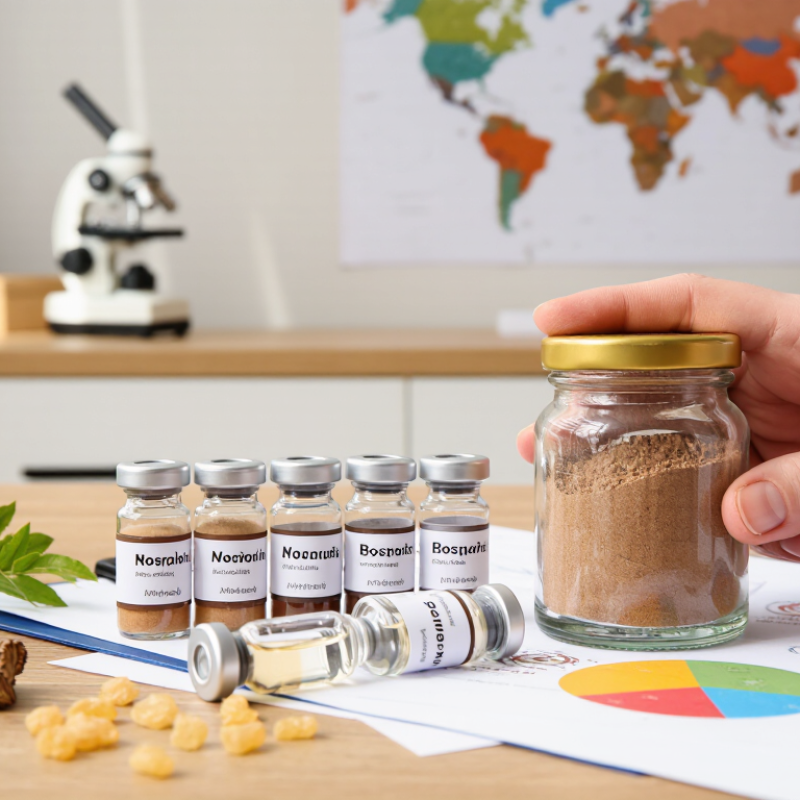
Sourcing Boswellia Serrata Extract globally requires more than comparing prices and delivery dates. The botanical name, plant part, extraction method, and resin origin all affect quality. A reliable process begins with confirming Boswellia serrata through documented botanical identification. It should also verify whether the extract comes from resin collected in India, Africa, or another recognized region. Small details matter. A brown powder can look consistent while its active profile varies significantly.

Experienced buyers usually request a complete technical file before discussing long-term supply. This file may include a specification sheet, certificate of analysis, allergen statement, safety data, and recent microbiological results. Testing should address identity, active boswellic acids, heavy metals, pesticides, solvents, and contamination risks. Independent laboratory confirmation is valuable when the supplier’s results appear unusually perfect. A polished brochure is not proof.

Global sourcing also depends on traceability, ethical harvesting, stable documentation, and realistic logistics. Suppliers should explain batch numbering, packaging conditions, shelf life, and storage temperature. Certifications can support confidence, but they require verification rather than blind acceptance. Organic, GMP, ISO, and other claims may differ by market and product category. Regulatory expectations also vary across countries, especially for dietary supplements, cosmetics, and functional ingredients.

There is no flawless sourcing route. Weather, harvest pressure, freight delays, and inconsistent resin quality can disrupt planning. A careful buyer builds contingency options without weakening standards. The strongest approach combines supplier interviews, sample testing, production audits, and clear written specifications. In the end, dependable Boswellia Serrata Extract sourcing rests on evidence, communication, and the willingness to question convenient assumptions.
How to Source Boswellia Serrata Extract Globally?

Define Boswellia Serrata and Its Global Market Uses

Boswellia serrata is a deciduous tree native to dry regions of India and nearby South Asia. Its harvested product is the aromatic gum-resin, often sold as resin pieces, powder, or standardized extract. The resin contains boswellic acids, including AKBA, which laboratories measure using HPLC. The European Medicines Agency identifies Boswellia resin as a traditional herbal substance, while the United States Pharmacopeia provides quality guidance for botanical materials.

Global demand is linked to dietary supplements, traditional medicine, sports nutrition, and selected cosmetic formulations. The Global Wellness Institute valued the worldwide wellness economy at 6.3 trillion US dollars in 2023. This figure is not a Boswellia-specific market value, but it shows the wider commercial setting. Industry estimates differ sharply because market reports use different product definitions. That deserves caution.

For international sourcing, buyers should inspect botanical identity, resin origin, harvest season, moisture, microbial limits, heavy metals, pesticides, and boswellic-acid profiles. A supplier’s certificate is only a starting point. Independent testing can reveal oxidation, dilution, or inconsistent extraction ratios. India remains a major supply base, but climate variability and collection practices can affect resin availability. The Convention on International Trade in Endangered Species database should also be checked when shipments involve regulated plant materials. Quality systems aligned with WHO Good Agricultural and Collection Practices improve traceability from dry forest collection to sealed extract drums. The process is rarely perfect. A low price may hide weak documentation.

How to Source Boswellia Serrata Extract Globally?

Definition, Composition, and Global Market Uses

Boswellia serrata is a resin-producing tree native to the Indian subcontinent. Its dried oleo-gum-resin is processed into extracts containing boswellic acids, which are commonly used in dietary supplements, traditional herbal preparations, sports nutrition products, and selected cosmetic formulations.

The chart shows approximate composition ranges reported for Boswellia serrata oleo-gum-resin before extraction. These figures describe raw resin composition and should not be interpreted as global market-share data. When sourcing internationally, buyers should verify botanical identity, country of origin, extraction ratio, boswellic-acid standardization, AKBA content, heavy metals, pesticides, microbiological quality, and solvent residues.

Identify Quality, Form, and Specification Requirements

Global sourcing of Boswellia serrata extract starts with a precise specification, not a low quotation. The World Health Organization reported in 2019 that 88% of its Member States use traditional medicine. This highlights the need for dependable botanical controls across markets. Request the accepted botanical name, plant part, country of origin, harvest season, and extraction ratio. Also define the form: raw powder, standardized dry extract, or liquid extract. These forms are not interchangeable.

Quality depends on measurable markers. Specify total boswellic acids and, when relevant, AKBA content. Ask for identity testing using HPTLC, HPLC, or validated chromatographic methods. Require limits for moisture, ash, microbial counts, pesticides, heavy metals, and residual solvents. A certificate of analysis should match the tested batch, not a generic template. USP and European Pharmacopoeia monographs can support method selection, but they may not cover every commercial specification. A perfect document can still hide weak sampling. That deserves attention.

Tips: Compare at least three recent batch records. Check whether the stated extract ratio matches the solvent and yield. Review transport temperature and packaging before approval. Keep retained samples for independent testing. I would also verify geographic and legal documentation with local specialists, because import rules differ. Do not accept “standardized” without a defined marker range. Even experienced buyers miss this detail.

Evaluate Cultivation Regions and Potential Suppliers

How to Source Boswellia Serrata Extract Globally?

Evaluate Cultivation Regions and Potential Suppliers

India remains the key sourcing region for Boswellia serrata, especially in dry forest zones across Rajasthan, Gujarat, Madhya Pradesh, and Andhra Pradesh. The India State of Forest Report 2023 records 25.17% forest and tree cover nationally. However, this figure does not confirm commercial cultivation of Boswellia serrata. Buyers should verify the exact harvest district, land status, and collection season.

Field experience shows that resin quality can change between nearby villages. Rainfall, tree age, tapping pressure, and storage humidity all matter. The supplier should provide botanical authentication, moisture results, extract-ratio records, and batch-specific chromatograms. The WHO Guidelines on Good Agricultural and Collection Practices for Medicinal Plants recommend documented harvesting and post-harvest controls. These principles are useful, even when suppliers describe material as “wild collected.”

Look beyond price.

Potential suppliers include forest-produce cooperatives, regional processors, and audited extract manufacturers. Ask for five years of traceability records, not only a recent certificate. Confirm whether the extract uses ethanol, water, or another permitted solvent. Request tests for heavy metals, pesticides, microbes, and adulteration. The USP Botanical Extracts Compendium identifies boswellic-acid testing as an important quality consideration. Yet one laboratory result is not enough. Independent retesting may reveal inconsistent sampling, a weakness many buyers overlook. Supplier audits should also examine worker safety, regeneration practices, storage temperature, and export documentation. Geological and climate data can support regional comparison, but they cannot replace field verification.

Verify Compliance, Testing, Certification, and Traceability

How to Source Boswellia Serrata Extract Globally?

Verify Compliance, Testing, Certification, and Traceability

Sourcing Boswellia serrata extract globally requires more than comparing prices and extract ratios. A reliable supplier should provide botanical identity, plant part, extraction method, and origin records. Check the Latin name carefully. Species confusion can affect efficacy and compliance. Request current specifications, allergen statements, and contaminant limits before commercial discussions. Requirements differ across markets, so one dossier may not fit every destination.

Independent testing should confirm boswellic acid content through a validated chromatographic method. The report should show sample identification, test date, method reference, and acceptance criteria. Review microbiology, heavy metals, pesticides, residual solvents, and adulteration screening. Do not accept a generic certificate of analysis. Ask whether the tested sample matches your production lot. Certification can support trust, but it does not replace technical review. Verify the certificate scope, issuing body, expiry date, and manufacturing site. GMP or ISO claims need evidence, not logos.

Traceability should connect harvested material to extraction, packing, and shipment records. A lot code should lead to batch documents within minutes, not several emails. Keep retained samples and define supplier change-notification rules. During an audit, compare invoices, warehouse labels, and laboratory results. Small mismatches deserve investigation. I have learned that polished documents can hide weak controls. Some suppliers struggle to explain seasonal yield changes. Record, test, and discuss that uncertainty before approval. No system is perfect; periodic requalification remains necessary.

Compare Pricing, Logistics, and Long-Term Sourcing Options

How to Source Boswellia Serrata Extract Globally?

Global sourcing starts with specification, not a low quotation. Boswellia serrata extract prices can shift sharply with resin origin, extract ratio, boswellic acid content, and testing requirements. The Grand View Research herbal supplements report valued the global market at USD 93.3 billion in 2023, showing strong demand but also greater pressure on raw-material supply. Request prices by active-content percentage, not only by kilogram.

Logistics often decides the real cost. Resin may move from collection areas to extraction facilities before international shipment. Sea freight suits stable, larger orders, while air freight protects urgent production schedules but raises landed cost. Ask suppliers for lead times, moisture limits, pesticide tests, heavy-metal results, and batch traceability. The WHO quality-control guidelines for herbal materials emphasize identity, contamination control, and documented handling. These checks should travel with every batch.

Long-term agreements can improve allocation and reduce repeated qualification work. However, a fixed annual price may become unrealistic when harvest conditions, energy costs, or freight rates change. A practical contract may use volume bands, review dates, and dual-source approval. It should also define failure remedies. Not every “standardized” extract performs identically in formulation. We learned this the hard way. Independent testing remains worthwhile, especially after a supplier changes its extraction site. The UN Comtrade database can help compare trade flows under relevant botanical-resin tariff categories, although classification may not separate Boswellia products cleanly. That limitation deserves attention.

FAQS

What is Boswellia serrata extract?

It comes from the aromatic gum-resin of a dry-region tree native to India and nearby South Asia. It is sold as resin pieces, powder, or standardized dry extract. The forms differ.

Which forms should buyers compare?

Buyers may choose raw powder, standardized dry extract, or liquid extract. These forms are not interchangeable. Compare extraction ratio, solvent, marker levels, moisture, and packaging.

Which quality markers matter most?

Total boswellic acids are common quality markers. Some specifications also require AKBA content. Validated HPLC or HPTLC testing can confirm the stated profile. A marker range should be written clearly.

What documents should a supplier provide?

Request botanical identity, plant part, origin, harvest season, extraction method, and current specifications. Also request contaminant limits, allergen information, and a batch-specific certificate of analysis. Generic documents are weak evidence.

How can buyers verify laboratory results?

Check the sample code, test date, method reference, and acceptance criteria. The report should match the actual production lot. Independent testing can reveal dilution, oxidation, or inconsistent extraction. Documents can still mislead.

Which safety tests are important?

Review moisture, microbial counts, heavy metals, pesticides, and residual solvents. Adulteration screening may also be necessary. Retain a sample from each approved batch for later comparison. Small differences matter.

How should traceability be checked?

The lot code should connect harvested material, extraction, packing, storage, and shipment records. Test whether staff can retrieve batch documents within minutes. Compare warehouse labels, invoices, and laboratory reports. That test may expose gaps.

What should buyers consider when sourcing internationally?

Check import requirements, regulated plant-material rules, origin records, and shipment documents for each destination. Climate variability and collection practices can affect supply from India. Compare at least three recent batch records before approval. Low prices deserve questions.

Conclusion

Sourcing Boswellia Serrata Extract globally requires a structured approach that begins with understanding the plant, its resin-derived active compounds, and its major applications in dietary supplements, functional foods, cosmetics, and wellness products. Buyers should define the desired extract form, concentration, botanical identity, active-marker levels, purity standards, packaging, and shelf-life expectations before contacting potential suppliers. Cultivation regions, harvesting methods, processing capabilities, production capacity, and supply continuity should also be carefully evaluated.

A reliable sourcing process includes reviewing supplier documentation, testing methods, certificates, traceability systems, and quality-control procedures. Independent testing may be used to confirm identity, potency, microbiological safety, heavy-metal limits, contaminants, and consistency between batches. In addition to comparing prices, buyers should assess minimum order quantities, lead times, shipping conditions, import requirements, payment terms, and communication quality. A long-term sourcing strategy should prioritize transparent documentation, stable quality, responsible procurement, and dependable logistics rather than focusing only on the lowest initial cost.

Clara

Clara

Clara is an accomplished marketing professional with a deep expertise in our company's product offerings. With a strong focus on delivering value through insightful content, she regularly updates our website's professional blog, sharing her extensive knowledge and innovative ideas. Clara is......