Herbal Extracts & Botanical Insights
Discover expert articles, scientific research, and technical guides on plant extraction technology.
Standardized Phytochemical Solutions
In-depth analysis of active botanical ingredients and global health trends.
Innovations in Natural Phytochemicals
Updating formulators and industry leaders with reliable botanical science updates.
Which Standardized Herbal Extracts Are Best in 2026?
Table of Contents
- What Makes an Extract Standardized? Marker Compounds and Assay Methods
- Quality Checks: FDA 21 CFR Part 111 and USP Identity, Purity, and Strength
- Ginkgo Benchmarks: 24% Flavone Glycosides and 6% Terpene Lactones
- Comparing Turmeric, Milk Thistle, and Ashwagandha Marker Levels
- How to Choose in 2026: Clinical Evidence, Safety, and Batch Testing
- FAQS
- Conclusion
- Related Posts
Choosing the best Standardized Herbal Extracts in 2026 takes more than comparing milligrams on a label. Buyers should check the plant’s Latin name, plant part, extraction method, and declared marker compounds. A 10:1 ratio alone does not prove potency or quality. Numbers need context.
The World Health Organization’s 2019 Global Report on Traditional and Complementary Medicine found that 88% of its Member States reported using traditional and complementary medicine. That figure signals broad use, not proof that every extract works. Grand View Research’s botanical extracts market report also tracks continued commercial growth, but market expansion cannot establish clinical effectiveness. Mark Blumenthal, founder and executive director of the American Botanical Council, has consistently emphasized botanical identity and quality control. Put as a practical paraphrase of his position: identify the plant correctly, then verify what is in the extract.
For this guide, “best” means transparent sourcing, reproducible marker levels, credible contaminant testing, and human evidence relevant to the intended use. Look for batch-specific certificates of analysis and methods such as chromatographic fingerprinting—not just a polished label. A certificate is useful only when its tests, limits, and laboratory are clear. That is not enough. Extracts can vary with harvest, processing, and storage, and standardization does not guarantee the same effects for every person. We will compare common options through these quality signals, while noting where evidence remains limited. Some rankings will be imperfect; the available data are uneven. That uncertainty belongs in the decision, not in the fine print.
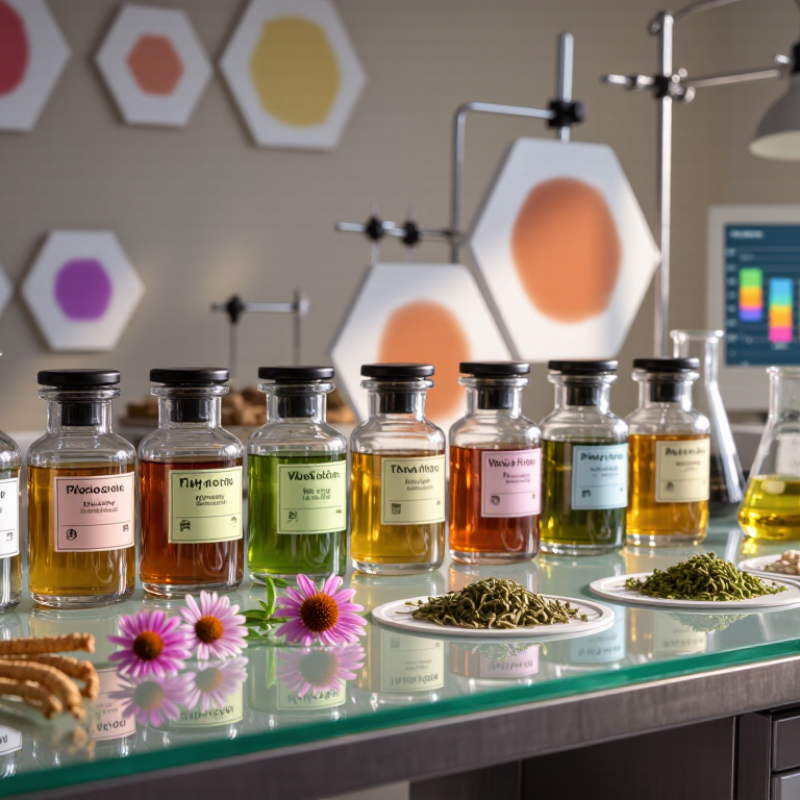
What Makes an Extract Standardized? Marker Compounds and Assay Methods
A standardized herbal extract is defined by a measured amount or range of selected marker compounds. A marker may help confirm identity, track processing, or indicate potency; it does not automatically prove clinical benefit. The distinction matters. A bottle can list “5%” yet leave unclear which compounds were measured, by what method, and against which reference standard.
The WHO’s Quality Control Methods for Herbal Materials describes tools including microscopy, thin-layer chromatography, and liquid chromatography for checking identity and quality. In practice, a chromatographic fingerprint can show several peaks, while a validated HPLC assay quantifies a chosen marker against a reference standard. Imagine comparing two amber extract samples: matching marker levels are useful, but different fingerprints may still reveal different chemical profiles. The U.S. Pharmacopeia’s herbal monographs likewise set method-specific tests and acceptance criteria. Still, one marker rarely tells the whole story; that limitation deserves scrutiny. The Council for Responsible Nutrition’s 2024 Consumer Survey reported that 75% of U.S. adults use dietary supplements, making clear, reproducible testing especially relevant. Buyers and manufacturers should look for the plant part, extraction details, marker identity, assay method, and stated acceptance range—not just a percentage on the label.
Quality Checks: FDA 21 CFR Part 111 and USP Identity, Purity, and Strength
Choosing a standardized herbal extract in 2026 starts with evidence, not a high marker percentage. Standardization describes a measured constituent; it does not prove the whole extract is authentic or effective. Ask which plant part was used, how identity was confirmed, and whether the test method suits that herb. Small details matter. Leaf and root can have different chemical profiles.
Under FDA 21 CFR Part 111, dietary supplement makers must establish specifications and follow documented quality-control procedures. Records should connect incoming materials, testing, production, and finished-batch release. That trail helps trace a discrepancy to a specific lot. Part 111 compliance is not FDA approval of an extract. Not the same.
USP standards can offer useful methods or monograph specifications for identity, purity, and strength when available. Check whether testing covers relevant contaminants, such as heavy metals, microbes, pesticides, or residual solvents. Look for actual results, defined limits, test methods, and lot-specific records, not just a certificate headline. Even careful systems can miss sampling errors; that possibility belongs on the checklist. Ask for the method.
Ginkgo Benchmarks: 24% Flavone Glycosides and 6% Terpene Lactones
A standardized Ginkgo biloba extract is often assessed against a benchmark of 24% flavone glycosides and 6% terpene lactones. These figures describe measured compound groups, not guaranteed clinical results. A label showing both percentages gives buyers a useful starting point. It does not tell the whole story.
Check whether the supplier reports batch-specific testing and identifies its analytical methods. A certificate of analysis should match the lot number on the package, not just show a generic specification. Look for testing of ginkgolic acids, which should be kept very low, and for checks on contaminants. Details matter.
The two percentages can also hide differences in extraction and composition. Flavone glycosides include compounds such as quercetin and kaempferol derivatives; terpene lactones include ginkgolides and bilobalide. I would not assume that a higher number is automatically better. That’s an easy mistake. Evidence from studies applies to the extract actually tested, so a similar label does not prove an identical product. People using blood-thinning medicines or managing seizure conditions should discuss Ginkgo with a qualified clinician before taking it. Batch records are unglamorous, but they make the benchmark more meaningful.
Comparing Turmeric, Milk Thistle, and Ashwagandha Marker Levels
For 2026, compare marker levels only after checking which plant part and extract the label describes. Turmeric extracts commonly list curcuminoids near 95%; milk thistle extracts often state 70–80% silymarin. Ashwagandha labels vary more, with root extracts commonly listing 2.5–5% withanolides. These are common label specifications, not guaranteed market-wide averages. Check the assay basis.
The USP Herbal Medicines Compendium and American Herbal Pharmacopoeia monographs provide identity and testing references for botanicals; they do not make a higher marker percentage proof of better results. A 95% curcuminoid extract, for example, is not automatically comparable with a whole-root powder. Extraction methods and plant parts matter. Labels vary.
I would compare the stated marker, serving size, and test method, then look for a recent independent certificate of analysis. One limitation: public market reports rarely compare all three herbs using the same assay, so neat rankings can be misleading.
The number is useful, but it is not the whole story.
How to Choose in 2026: Clinical Evidence, Safety, and Batch Testing
“Best” depends on the herb, the intended use, and the evidence for that exact extract. The American Botanical Council’s HerbalGram market report recorded $12.6 billion in U.S. herbal supplement sales in 2022. Growing demand makes careful evaluation more important, not less. Look for human clinical studies that identify the plant species, plant part, extraction method, and daily dose. A study on one extract may not apply to another. Standardization can help confirm a marker compound’s amount. It does not prove clinical benefit.
Safety details matter. Check cautions for pregnancy, medical conditions, and interactions with prescription medicines; ask a qualified clinician when unsure. The FDA’s dietary supplement current good manufacturing practice rules require manufacturers to establish specifications and verify product quality. Still, a label alone cannot show what is in every bottle. Seek a batch-specific certificate of analysis, with identity, potency, and contaminant results from a qualified laboratory. The 2024 Council for Responsible Nutrition survey found that 75% of U.S. adults use dietary supplements, underscoring how many people rely on these products. Not a guarantee. I would still want clearer, publicly accessible testing records; that gap is easy to overlook.
FAQS
Turmeric extracts often list about 95% curcuminoids. Milk thistle commonly lists 70–80% silymarin, while ashwagandha root extracts often list 2.5–5% withanolides. These are label specifications, not universal averages.
Not reliably. Plant part, extraction method, serving size, and assay basis can differ. Check those details first.
No. A high percentage does not prove greater clinical benefit. A concentrated extract is not automatically comparable to whole-root powder.
Check whether it names the plant species, plant part, extraction method, and daily dose. Evidence for one extract may not apply to another.
It can help confirm the amount of a marker compound. It does not prove the product works as intended.
Look for a recent, batch-specific certificate of analysis. It should report identity, potency, and contaminant results from a qualified laboratory. A label alone is not enough.
Review cautions related to pregnancy, health conditions, and prescription medicines. Ask a qualified clinician if you are unsure. Small detail, but important.
No. Reports rarely test all three herbs using the same method, so simple rankings can mislead. I would still want clearer batch records; that gap is easy to miss.
Conclusion
Standardized Herbal Extracts are defined by measurable amounts of selected marker compounds, verified through suitable analytical assays. Standardization helps make products more consistent, but a marker level alone does not prove that an extract is effective or appropriate for everyone. Quality assessment also considers identity, purity, strength, and manufacturing controls, including relevant requirements under FDA 21 CFR Part 111 and applicable USP methods.
The article reviews common benchmarks, including ginkgo extracts standardized to 24% flavone glycosides and 6% terpene lactones, and explains how marker levels can be compared for turmeric, milk thistle, and ashwagandha. For choosing an extract in 2026, readers should weigh clinical evidence alongside safety considerations and transparent batch testing. Checking current specifications and test results can help distinguish a clearly characterized extract from one whose composition is uncertain.

Blog Tags: