

Herbal Extracts & Botanical Insights
Discover expert articles, scientific research, and technical guides on plant extraction technology.
Standardized Phytochemical Solutions
In-depth analysis of active botanical ingredients and global health trends.
Innovations in Natural Phytochemicals
Updating formulators and industry leaders with reliable botanical science updates.
7 Best Plant Extracts for Bio Fertilizers for Buyers
Table of Contents
- Frame Buyer Demand with FAO’s 185.9 Mt Global Fertilizer Use in 2022
- Distinguish Plant Extract Biostimulants from Microbial Biofertilizers
- Compare 7 Extracts by Actives: Seaweed, Neem, Moringa, Alfalfa, Aloe, Willow
- Verify Quality with NPK, pH, EC, and ISO/IEC 17025 Lab Results
- Select Products by Trial Results, Label Rate, Shelf Life, and Cost per Hectare
- FAQS
- Conclusion
- Related Posts
Plant Extracts for Bio Fertilizers are gaining attention among growers seeking practical ways to support soil activity and crop performance. Yet a botanical label alone tells buyers little. The plant species, extraction method, concentration, storage conditions, and compatibility with beneficial microbes all matter. A liquid that looks dark and rich may still vary from batch to batch. Details matter.
This guide compares seven widely discussed options: seaweed, moringa, neem, aloe vera, comfrey, garlic, and nettle extracts. Their potential uses differ, and results depend on crop, soil, dosage, and formulation. Seaweed products, for example, may contain naturally occurring compounds, but buyers should check the stated composition and field evidence rather than assume uniform results. Neem and garlic extracts also require careful attention to concentration and compatibility. More is not always better.
Dr. Rattan Lal, an internationally recognized soil scientist, has emphasized the importance of soil health to sustainable agriculture. A useful buyer’s principle, consistent with that focus, is: “Choose an extract for its evidence, composition, and fit with the soil—not its label alone.” This is an editorial guide, not a direct quotation from Dr. Lal. For each product, request a technical data sheet, batch details, application guidance, and credible trial information. Compare claims with measurable outcomes, such as crop response or soil indicators. Some products may disappoint. That is worth admitting. Careful comparison helps buyers identify plant extracts suited to their production goals, while leaving room to question marketing claims and local results.
Frame Buyer Demand with FAO’s 185.9 Mt Global Fertilizer Use in 2022
FAO reported global fertilizer use of 185.9 million tonnes in 2022, a figure that shows the scale of crop nutrition needs. It does not mean buyers are ready to replace conventional fertilizers with plant extracts. It does point to a large market where growers are testing complementary inputs. For buyers, the key question is practical: can an extract support a consistent biofertilizer without harming its beneficial microbes?
Seven candidates often considered are seaweed, moringa leaf, neem, alfalfa, aloe vera, garlic, and willow bark extracts. Their composition varies with plant variety, harvest timing, and extraction method. Seaweed and moringa may be explored as biostimulant ingredients, while garlic and neem require careful compatibility checks. Plant extracts are not automatically fertilizers. That distinction is easy to miss.
Ask suppliers for batch specifications, extraction details, storage guidance, and evidence from relevant crop trials. Check whether the product stays stable in the intended liquid or powder formulation.
A small compatibility test can reveal microbial growth problems before a larger order arrives. Field results matter more than attractive ingredient claims.
Some crops may respond; others may not. Buyers should compare performance, cost per treated hectare, and nutrient contribution separately, then avoid treating a single trial as proof of universal benefit.
Distinguish Plant Extract Biostimulants from Microbial Biofertilizers
Plant extracts and microbial biofertilizers can support crops, but they work differently. Seaweed, aloe, and moringa extracts are commonly used as biostimulant ingredients. They may help plants manage stress or support root and shoot development. Their effects depend on the crop, formulation, dose, and growing conditions. They are not automatically fertilizers, and they do not necessarily add meaningful amounts of nutrients.
Microbial biofertilizers contain living organisms, such as selected bacteria or fungi. These microbes may help make certain nutrients more available or support root-zone processes. A plant extract, by contrast, is made from plant material and does not provide the same living microbial function. Some products combine both types, so buyers should check the ingredient list and product specifications rather than relying on “bio” in the name. Read carefully.
For a practical comparison, ask whether the product lists identifiable plant extracts, viable microbial strains, or both. Check application rates, storage guidance, and compatibility with other inputs. Heat can affect living microbes, while extract composition may vary with plant source and processing. Small differences matter. A field trial on a few rows can reveal more than a broad claim. Results may still be uneven across soils and seasons, and that uncertainty deserves attention when choosing an input.
| Plant extract | Typical botanical source | Commonly marketed role | Buyer considerations | How it differs from a microbial biofertilizer |
|---|---|---|---|---|
| Seaweed extract | Brown seaweeds, commonly Ascophyllum nodosum or Ecklonia maxima | Plant biostimulant used to support growth and tolerance to some abiotic stresses; composition varies with seaweed species and processing. | Check species, extraction method, soluble solids, batch consistency, application route, and trial data for the intended crop. Do not assume every product has the same composition or effect. | It is a processed extract, not a living inoculant. It does not supply nitrogen through biological fixation or form mycorrhizal associations. |
| Moringa leaf extract | Moringa oleifera leaves | Used in some foliar or seed-treatment biostimulant formulations. Reported effects depend on preparation, dose, crop, and growing conditions. | Request a defined concentration, preparation specification, recommended dilution, and crop-specific efficacy data. Avoid relying on general claims from small or non-comparable trials. | Its plant-derived compounds may influence crop responses, but the extract does not contain beneficial microbes by definition. |
| Alfalfa extract | Medicago sativa (alfalfa) | May be used as a botanical biostimulant; alfalfa-derived materials can contain triacontanol, a plant growth regulator. | Check whether triacontanol content is specified and whether the product is authorized for the intended use in your market. Compare recommended rates and crop-specific evidence. | Any response is associated with extract constituents, not microbial nutrient fixation or root colonization. |
| Willow bark extract | Salix species bark | Sometimes used in botanical formulations associated with plant response or stress-management claims. Composition can include salicylate-related compounds. | Ask for chemical characterization, formulation stability, crop-specific results, and clear use directions. Evidence and regulatory status can vary by product and region. | It is a non-living botanical input; it does not establish a population of beneficial bacteria or fungi in soil. |
| Aloe extract | Aloe vera (also known as Aloe barbadensis) leaf material | Used in some seed-treatment and plant-biostimulant formulations; reported outcomes are formulation- and crop-dependent. | Check the plant part used, extraction and filtration details, concentration, storage stability, and evidence from trials relevant to your crop and application method. | It may provide plant-derived compounds, but it is not a microbial inoculant and does not perform microbial nitrogen fixation. |
| Yucca extract | Yucca schidigera or other stated Yucca species | Often used for its saponin content as a wetting or formulation aid; some products are also marketed for soil or plant-stress applications. | Confirm the declared function and saponin specification. Evaluate whether the product is a fertilizer, adjuvant, or soil-conditioning input under local rules; do not assume it directly supplies nutrients. | Its primary function is not microbial inoculation. It does not replace products containing identified beneficial microorganisms. |
| Garlic extract | Allium sativum bulbs | More commonly associated with botanical pest-management or antimicrobial uses than with established fertilizer value; some formulations make broader plant-support claims. | Verify the registered use, crop safety, application restrictions, and compatibility with beneficial organisms. Request independent, crop-specific evidence before buying for a biostimulant purpose. | It is a botanical extract, not a beneficial microbial product. Its antimicrobial properties may also affect non-target microorganisms, depending on dose and formulation. |
| Buyer distinction: Plant extract biostimulants are non-microbial products intended to influence plant processes or nutrient-use efficiency; their effects depend on composition, crop, dose, and conditions. Microbial biofertilizers contain specified living organisms—such as suitable Rhizobium strains for compatible legumes, selected Azotobacter, or arbuscular mycorrhizal fungi—and should be evaluated for organism identity, viable count, expiry, storage conditions, and crop compatibility. Neither category should be assumed to replace a balanced nutrient-management program. Check local product registration and label claims before purchase. | ||||
Compare 7 Extracts by Actives: Seaweed, Neem, Moringa, Alfalfa, Aloe, Willow
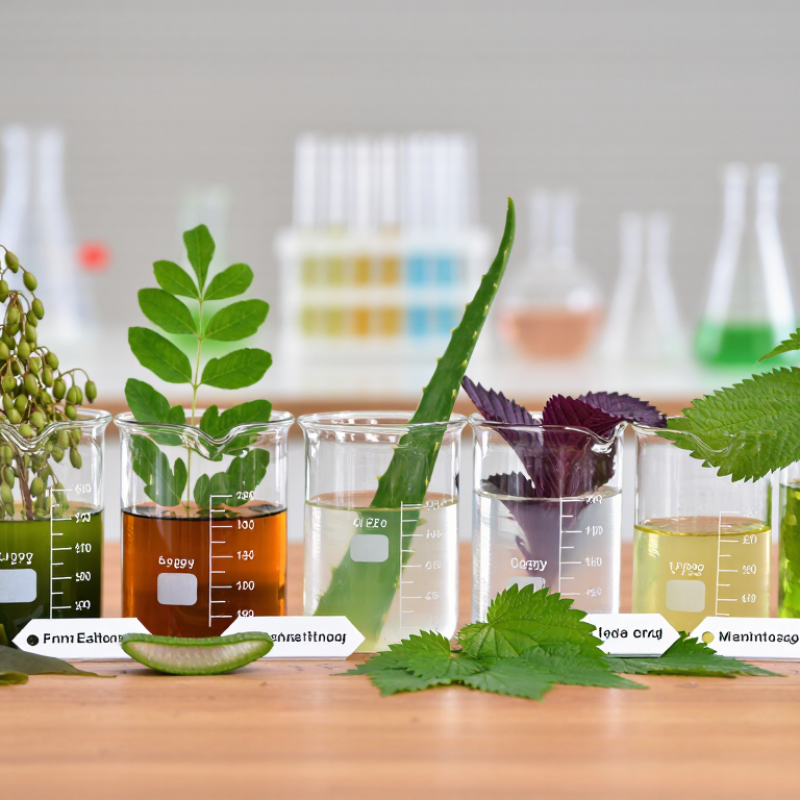
Seaweed, neem, moringa, alfalfa, aloe, willow, and nettle extracts differ in their useful compounds.
FAO’s The State of World Fisheries and Aquaculture 2024 reports 37.8 million tonnes of aquatic plant production in 2022.
That scale supports supply availability, but does not guarantee consistent extract strength.
Check species, extraction method, and batch analysis.
Seaweed extracts can supply alginates and other polysaccharides. Neem contains limonoids, while moringa leaves are valued for zeatin and antioxidants.
Alfalfa is associated with triacontanol; aloe provides polysaccharides such as acemannan.
Willow bark contains salicylates, and nettle extracts contribute minerals and phenolic compounds.
These profiles suggest different uses, not identical results.
Soil, crop, and dose matter.
Buyers should request active-compound ranges and solubility data, then test small plots before wide application.
Watch for sediment in a clear jar after dilution. It may signal poor processing or simply insoluble plant material; ask the supplier to clarify.
A label listing “seaweed extract” alone is thin evidence.
Compare independent lab results, storage stability, and compatibility with irrigation systems.
Biofertilizer claims should distinguish nutrient supply from biostimulant effects.
FAO production figures describe the sector, not product performance.
That distinction is easy to miss.
Verify Quality with NPK, pH, EC, and ISO/IEC 17025 Lab Results
When comparing plant extracts for biofertilizer use, request a batch-specific certificate of analysis, not just a general product sheet. It should report nitrogen, phosphorus, and potassium, with units and testing methods clearly stated. Extracts from different plant materials can vary, and even harvest conditions may shift nutrient levels. A tidy NPK figure is useful, but it does not tell the whole story.
Check pH and electrical conductivity (EC) using the stated sample dilution. These values can affect mixing, storage, and suitability for a particular crop or application system. Results without a dilution ratio are hard to compare. Small details matter. Ask whether the laboratory tested the supplied batch and whether its ISO/IEC 17025 accreditation covers the relevant methods. Accreditation applies to laboratory competence within a defined scope; it does not certify a fertilizer product or guarantee field results.
Compare results across batches before placing a large order, and keep the reports with your purchase records. If the figures seem unusually precise, ask how the sample was prepared and tested. I would not rely on one certificate alone: a lab result describes a sample under specific conditions, while performance can still vary in real soil, water, and weather.
Select Products by Trial Results, Label Rate, Shelf Life, and Cost per Hectare
7 Best Plant Extracts for Bio Fertilizers for Buyers
When comparing plant extracts for biofertilizer use, look beyond headline claims. Ask for trial results from crops and conditions similar to yours. Check whether tests report untreated controls, application timing, and measurable outcomes, such as yield or root growth. A greenhouse result may not predict performance in a dry field. Small plots matter.
Tips: Confirm the label rate and application method before estimating cost. Calculate cost per hectare using the full season’s required applications, not just the price per container. Check the expiry date and storage instructions; heat can shorten shelf life.
Compare products at their recommended rates, not equal volumes. A concentrated extract may require less product, while a lower-priced option may need repeat applications. Include labor, water, and freight in your hectare estimate. Keep batch records and note weather, soil condition, and crop stage during trials. These details make comparisons more useful, though they cannot remove every source of variation. If trial data are limited, treat early results as a reason to test cautiously, not as proof. It is easy to overvalue one good harvest.
FAQS
Global fertilizer use reached 185.9 million tonnes in 2022. That shows the scale of crop nutrition needs, not guaranteed demand for extracts.
Common candidates include seaweed, moringa leaf, neem, alfalfa, aloe vera, garlic, and willow bark. Their composition can vary.
Not automatically. Some may complement crop nutrition, but buyers should check nutrient contribution and trial results separately.
Request formulation and storage details, then run a small compatibility test. It may reveal microbial growth problems before a larger order.
Look for comparable crops and growing conditions, untreated controls, application timing, and measured outcomes such as yield or root growth. Small plots help.
Calculate cost per hectare using the recommended rate and every seasonal application. Include labor, water, and freight.
A concentrated extract may require less product, while a cheaper option may need repeat applications. Heat can shorten shelf life.
I would not treat one good harvest as proof. Record weather, soil, and crop stage, then test cautiously across relevant conditions.
Conclusion
With global fertilizer use reaching 185.9 million tonnes in 2022, buyers are looking for effective ways to support crop nutrition and use inputs efficiently. Plant Extracts for Bio Fertilizers can help meet this demand, but plant-based biostimulants should not be confused with microbial biofertilizers: extracts may support plant growth or stress tolerance, while microbial products rely on beneficial organisms. Seaweed, neem, moringa, alfalfa, aloe, and willow extracts offer different active compounds, so selection should reflect the crop, growing conditions, and intended benefit.
Before purchasing, check the product’s NPK content, pH, and electrical conductivity, and request relevant test results from an ISO/IEC 17025-accredited laboratory. Compare products through field-trial data, clearly stated label application rates, shelf life, and total cost per hectare. These checks help buyers assess quality and practical value rather than relying on broad claims alone.

Blog Tags: